Apple has been accused of intentionally installing security backdoors in some 600 million iOS devices that offer surveillance-level access to data including photos, browsing history and GPS locations.
The vulnerabilities were uncovered by security expert Jonathan Zdziarski, who presented an academic paper on the subject at a hacker conference in New York last Friday.
Apple has issued a statement in response to the allegations saying that the company’s “diagnostic functions do not compromise user privacy and security,” but Zdziarski has responded by noting that these services “dish out data” regardless of whether the user has agreed to diagnostics. ...
Patient portal are excellent opportunities for providers to expand the way they engage with their patients. Here are a some best practices for using portals in your practice.
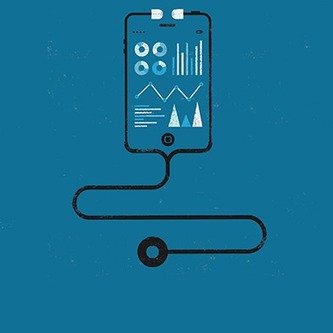
After decades as a technological laggard, medicine has entered its data age. Mobile technologies, sensors, genome sequencing, and advances in analytic software now make it possible to capture vast amounts of information about our individual makeup and the environment around us. The sum of this information could transform medicine, turning a field aimed at treating the average patient into one that’s customized to each person while shifting more control and responsibility from doctors to patients.
The question is: can big data make health care better?
“There is a lot of data being gathered. That’s not enough,” says Ed Martin, interim director of the Information Services Unit at the University of California San Francisco School of Medicine. “It’s really about coming up with applications that make data actionable.”
The business opportunity in making sense of that data—potentially $300 billion to $450 billion a year, according to consultants McKinsey & Company—is driving well-established companies like Apple, Qualcomm, and IBM to invest in technologies from data-capturing smartphone apps to billion-dollar analytical systems. It’s feeding the rising enthusiasm for startups as well.
Venture capital firms like Greylock Partners and Kleiner Perkins Caufield & Byers, as well as the corporate venture funds of Google, Samsung, Merck, and others, have invested more than $3 billion in health-care information technology since the beginning of 2013—a rapid acceleration from previous years, according to data from Mercom Capital Group.
Il y a un an entrait en vigueur l’arrêté définissant les bonnes pratiques de la vente en ligne de médicaments. Depuis, le marché a évolué et aujourd’hui les comportements et les habitudes des français sont en train de changer. Premier comparateur en ligne et acteur reconnu dans le secteur avec un million d’euros de CA généré …
You are on holiday. On the beach. In Greece. The annoying thought pops into your head that you’ve left the heating on back home. Normally, the thought would nag at you for the rest of the trip. Images of pot plants wilting would drift into your mind, tainting the sweet pineapple taste of that third piña colada. No more. With a few swipes on your smartphone the thermostat can be dialled down remotely. The boiler turned off. Appealing? Google thought the thermostat idea was powerful enough to warrant spending $3.2 billion for the market leader Nest.
Insights from our international survey can help healthcare organizations plan their next moves in the journey toward full digitization. A McKinsey & Company article.