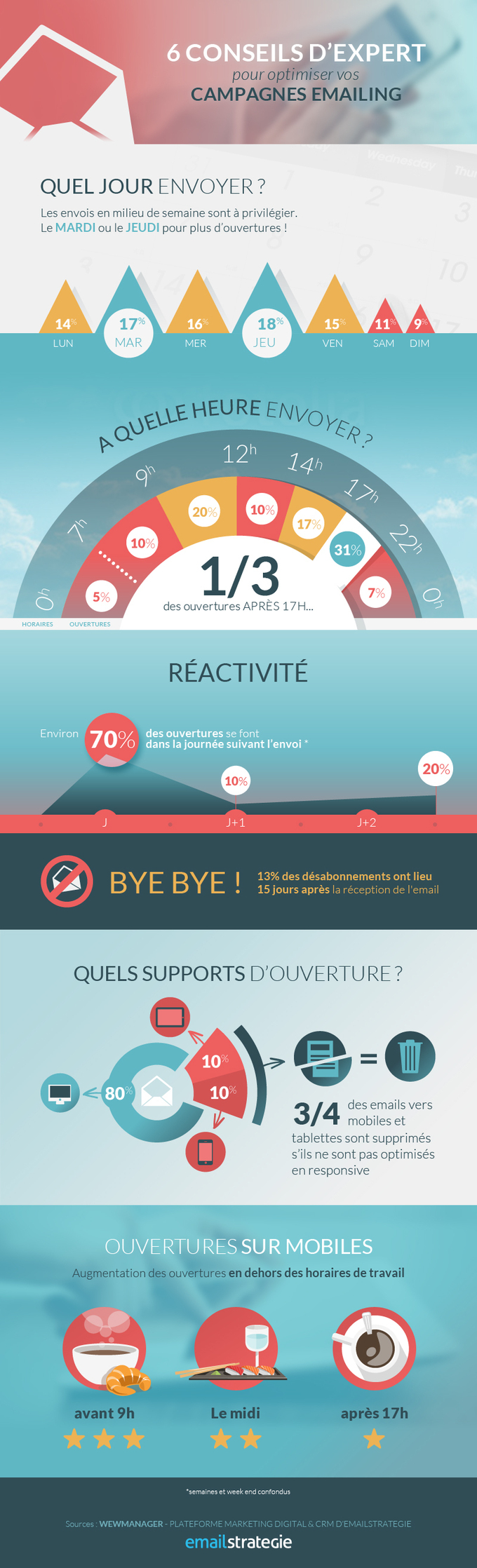
Cette infographie est issue d’une analyse réalisée par EmailStrategie de juin 2013 à juin 2014. Les résultats sont basés sur 140 000 campagnes e-mailing, réalisées par 500 entreprises clientes. 298 millions d’ouvertures ont été ainsi prises en compte.
L'idée est simple : Nous n'avons pas tous les mêmes besoins ou envies avec une montre connectée. Alors, pourquoi ne pas l'adapter pour n'avoir que ce dont on a besoin en oubliant
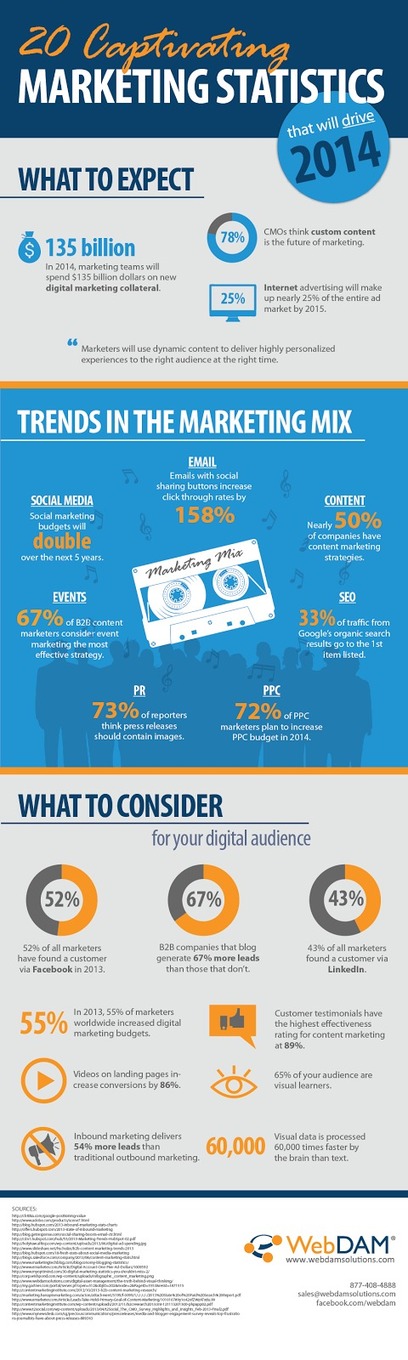
Selon certaines prévisions, les marketeurs avisés vont développer davantage leur stratégie de visibilité internet sur les réseaux sociaux durant l'année 2014.
BenefitsPro Gamification growing in wellness BenefitsPro The survey found that 62 percent of surveyed employers report using one or more gamification elements to promote health engagement to employees, and 31 percent say they are likely to adopt...
Wearables, devices used to sense data and process it into information, are generating quite the buzz in healthcare these days. But down the line, does that buzz come with a sting?
In Wearable Tech News, Tony Rizzo reports wearable technology spending predictions of $50 billion by 2018. He also reports on a ground-breaking, glucose-sensing contact lens for diabetics that will be a “true solution for a very real medical problem that affects hundreds of millions of people.”
By 2016, wearable wireless medical device sales will reach more than 100 million devices, according to a Cisco blog on the future of mobility in healthcare. The importance of these devices is that healthcare professionals can access critical data via mobile apps before, during and after a patient’s hospitalization, thus boosting the speed and accuracy of patient care, the blog says.
The Age of Wearables has a few caveats, though – note that a doctor “can,” “could,” “may” or “potentially” be able to monitor a patient from a wearable, as the products are still under development. One product cites unpublished research as support, and another uses a modality, thermography, that the National Cancer Institute states has no additional benefit for breast cancer screening.
The new, intense focus on wearables is the engagement of the general public, both the ill and the well, and how they collect and transmit patient information to physicians and EHRs. This presents two challenges:
1. Are physicians prepared for this tidal wave of data and information?
2. What is the true cost of the data surge versus its benefits?
Like all healthcare information technology, wearables have huge potential – married to massive challenges.