

02/07/2014

Patients Want Digital from Pharma | PM360

Patients Want Digital from Pharma
by Sam Welch on June 9th, 2014


New survey data released by Accenture found that more than 75% of consumers expect drug companies to provide additional services that complement their medical products.

Digital platforms are frequently mentioned as the preferred method of contact. Sixty-nine percent of respondents said they’d prefer information from pharma companies via email, followed by printed materials (66%), websites (48%), mobile apps (44%) and social media (38%). Print media made the list, though patients have made it clear that they are seeking resources through digital channels.

Of interest to marketers, the data show that 64% of patients are willing to trade personal information to get free, relevant content. Not only should we engage around this opportunity, this indicates that marketers can achieve access to more customer data in order to personalize information to each patient’s needs. And digital expands opportunities to track outcomes and tailor content to the individual.

Consumers want more tools to manage their healthcare. If we’re really moving into an age where “an app a day can keep the doctor away,” then we must address this need to make valuable tools available to patients.

Read the full Accenture report here.


Source: www.pm360online.com
02/07/2014

Infographic: Future of Healthcare

The Future of Healthcare: The Connected HospitalShare this infographic:

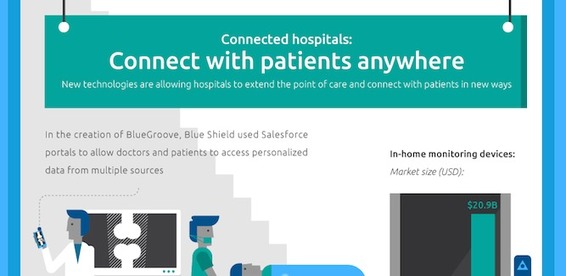
New advances in technology are radically transforming the way healthcare is delivered and managed. These changes extend from the point of care to payment and reimbursement - improving outcomes and overall provider and payer effectiveness. Delivering this patient experience requires providers to connect with their patients, and across healthcare systems in new ways. And with Meaningful Use deadlines continuing to loom large, the cost of not doing so is clear. Read on to find out how connected hospitals are meeting this challenge. 

Learn more about Healthcare Integration Solutions from MuleSoft »

Source: www.mulesoft.com

02/07/2014

Social media fails: healthcare marketers now ask « what next? »

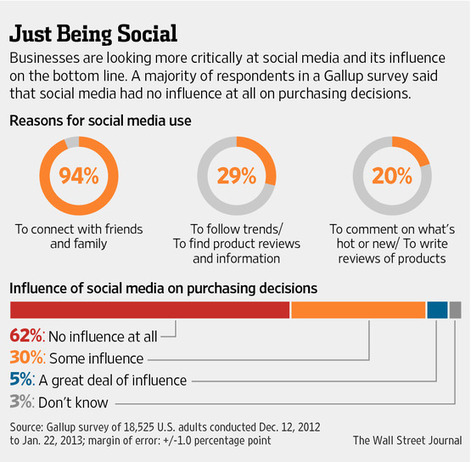
“Social media is not the powerful and persuasive marketing force many companies hoped they would be,” concludesGallup Inc., which on Monday is releasing a report that examines the subject. Gallup says 62% of the more than 18,000 U.S. consumers itpolled said social media had no influence on their buying decisions. Another 30% said it had some influence. U.S. companies spent $5.1 billion on social-media advertising in 2013, but Gallup says “consumers are highly adept at tuning out brand-related Facebook and Twitter content.”  Just when we thought it was safe to use social media they push us back out!


Most consumers aren’t visiting social media sites to engage with brands — they are there to interact with people they know. According to Gallup research, the vast majority of consumers (94%) who use Facebook, Twitter, and other social networking channels do so to connect with family and friends. They are far less interested in learning about companies and/or their products, which implies that many companies have social media strategies in place that may be largely misdirected.

Social media is not the powerful and persuasive marketing force many companies hoped they would be. When Gallup asked more than 18,000 consumers about the influence of social media on their buying decisions, 62% said they had no influence at all. Even among millennials (those born after 1980), whom companies often think of as the core social media audience, 48% said these sites were not a factor in their decision-making.

And while many companies correlate the number of fans and followers with their social media success, Gallup alsoalso finds that these metrics can be misleading. Of the consumers who reported “liking” or following a company, 34% still said that social media had no influence on their purchasing behavior, while 53% said they had only some influence.

When compared with more traditional forms of social networking, social media initiatives may actually be the least effective method for influencing consumers’ buying decisions. Gallup research shows that consumers are much more likely to turn to friends, family members, and experts when seeking advice about companies, brands, products, or services. Company-sponsored Facebook pages and Twitter feeds have almost no persuasive power.

What does this mean for pharma marketers? 

(1) Social media alone is not going to deliver on the promise of patients asking for an Rx.  It is PART of an integrated marketing initiative to reach health searching consumers online.

(2) Pharma, which is heavily ROI driven, needs to think of social media, not as a conversion platform, but rather a way to help patients get the information they need to make health care decisions.

(3) DTC marketers should experiment with social media but have clear and concise objectives before allocating resources.


Source: worldofdtcmarketing.com